Follow Us:

News

How Are Active Pharmaceutical Ingredients Manufactured for Pharmaceutical Production?

2026-10-19 0 Leave me a message

Every tablet, capsule, and injectable on the pharmacy shelf contains an Active Pharmaceutical Ingredient, or API. The API is the biologically active component that produces the therapeutic effect. Without it, the medicine is just filler and binder. For a procurement manager at a pharmaceutical company, the API is the most critical material in the supply chain. Its quality, purity, and consistency determine the safety and efficacy of the finished drug product. A single impurity or a deviation in crystal form can render a batch unusable. This is why API manufacturing is one of the most tightly regulated and technically demanding segments of the chemical industry.


This guide is written for buyers who need to source Active Pharmaceutical Ingredients for pharmaceutical production. We will explain how APIs are manufactured, from the initial synthesis route to the final purification and quality control. We will cover the regulatory framework, the key manufacturing processes, the specifications to include in a purchase order, and the criteria for evaluating a supplier. We will also provide detailed product parameters from our factory at Henan Purui Pharmaceutical Co., Ltd. Whether you are sourcing APIs for generic drugs, contract manufacturing, or new drug development, this guide will help you make informed decisions that protect your product and your patients.

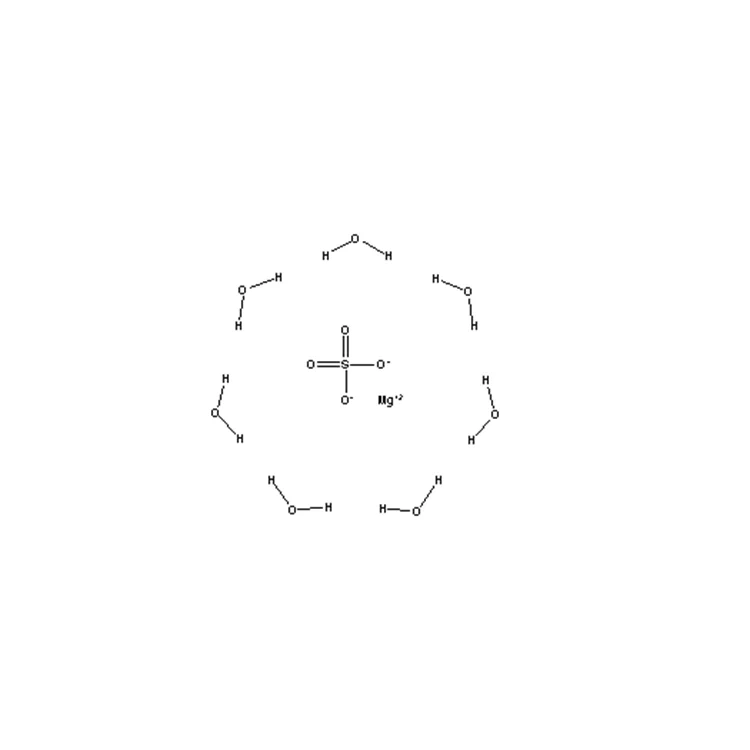
Magnesium sulfate anhydrous


Table of Contents


1. What Is an API and How Does It Fit into Pharmaceutical Production?

An Active Pharmaceutical Ingredient is the substance in a drug that has pharmacological activity. It is the "active" part of the medicine. The API is combined with excipients—inactive substances such as binders, fillers, and coatings—to form the finished dosage form. For example, in a tablet of paracetamol, the API is paracetamol, and the excipients are the materials that give the tablet its shape, stability, and controlled release. The API is produced by a chemical or biological process, and it must meet stringent purity, potency, and quality standards. The table below summarizes the role of the API and its relationship to the finished drug product.

Component Function Typical Examples Regulatory Oversight
API Provides therapeutic effect Paracetamol, amoxicillin, metformin Strict (GMP, ICH guidelines)
Excipients Deliver the API, aid manufacturing Lactose, magnesium stearate, HPMC Moderate (pharmacopoeial standards)
Finished Dosage Form Final product for patient use Tablets, capsules, injections Strict (marketing authorization)

At Henan Purui Pharmaceutical Co., Ltd., our factory specializes in the manufacturing of Active Pharmaceutical Ingredients for pharmaceutical production. We supply APIs to generic drug manufacturers, contract manufacturing organizations, and research-based pharmaceutical companies. Our products are manufactured in compliance with GMP standards and are supported by comprehensive regulatory documentation.


2. What Are the Main Steps in API Manufacturing?

API manufacturing involves a series of chemical or biological steps that transform raw materials into a pure, active substance. The specific steps depend on the API, but the general process follows a consistent pattern. It begins with the selection of a synthesis route, which is the sequence of chemical reactions that produces the target molecule. The route is chosen based on yield, cost, safety, and regulatory considerations. The next step is the procurement of raw materials, which must meet strict quality standards. The synthesis is then carried out in a series of reactors, where the reactions take place under controlled conditions of temperature, pressure, and pH. After synthesis, the crude API is purified using techniques such as crystallization, distillation, or chromatography. The final step is drying and milling, which produces the API in the desired particle size and crystal form. The table below summarizes the main steps in API manufacturing.

Step Description Critical Parameters Quality Control
Synthesis Route Selection Design the chemical sequence Yield, cost, safety, patent Route review, impurity profile
Raw Material Procurement Source starting materials and reagents Purity, grade, supplier qualification Identity, assay, impurity testing
Chemical Synthesis React raw materials in reactors Temperature, pressure, pH, time In-process controls, reaction monitoring
Purification Isolate and purify the API Crystallization, distillation, chromatography Purity, impurity profile
Drying and Milling Dry the API and control particle size Temperature, time, particle size Moisture content, particle size distribution

At our factory, we follow a structured manufacturing process that is designed to ensure the purity, potency, and consistency of our Active Pharmaceutical Ingredients. We use advanced reactors, purification equipment, and analytical instruments to control every step of the process. Our quality control laboratory is equipped to perform a full range of tests, including HPLC, GC, and ICP-MS, to verify the quality of our products.


3. How Does GMP Compliance Affect API Quality?

GMP, or Good Manufacturing Practice, is the regulatory framework that ensures that pharmaceutical products are consistently produced and controlled according to quality standards. For APIs, GMP compliance is not optional. It is a requirement for market access in most countries. GMP covers all aspects of manufacturing, including facilities, equipment, personnel, documentation, and quality control. The key elements of GMP for API manufacturing are: a quality management system, appropriate facilities and equipment, qualified and trained personnel, validated processes, comprehensive documentation, and rigorous quality control. The table below summarizes the GMP requirements for API manufacturing.

GMP Element Requirement Impact on API Quality
Quality Management System Documented procedures, deviation management, CAPA Ensures consistent quality and continuous improvement
Facilities and Equipment Cleanrooms, HVAC, validated equipment Prevents contamination and cross-contamination
Personnel Qualified and trained staff Ensures proper execution of procedures
Process Validation Documented evidence that the process is capable Ensures consistent product quality
Documentation Batch records, SOPs, analytical records Provides traceability and accountability
Quality Control Testing of raw materials, in-process, and finished API Verifies that the API meets specifications

At Henan Purui Pharmaceutical Co., Ltd., our factory is GMP certified and operates in compliance with ICH Q7, the international standard for API manufacturing. We have a comprehensive quality management system that covers all aspects of our operations. We maintain detailed batch records and analytical records for every API we produce. We also undergo regular audits by regulatory authorities and customers to verify our compliance. Our commitment to GMP is the foundation of the quality and reliability of our Active Pharmaceutical Ingredients.


4. What Specifications Should Buyers Include in a Purchase Order?

When purchasing Active Pharmaceutical Ingredients, the buyer should include detailed specifications in the purchase order to ensure that the product meets the required quality standards. The key specifications are the chemical name, the molecular formula, the molecular weight, the assay, the impurity profile, the physical form, the particle size, the residual solvents, the heavy metals, and the microbial limits. The chemical name and molecular formula identify the substance. The assay specifies the required purity. The impurity profile specifies the maximum allowable levels of related substances and degradation products. The physical form specifies the crystal form or polymorph. The particle size specifies the distribution required for downstream processing. The residual solvents and heavy metals specify the limits for toxic impurities. The microbial limits specify the allowable levels of bacteria and fungi. The table below summarizes the specifications that should be included in a purchase order.

Specification Unit of Measure Example
Chemical Name IUPAC name N-(4-hydroxyphenyl)acetamide
Molecular Formula Formula C8H9NO2
Assay % (on dried basis) 99.0% - 101.0%
Impurity Profile % or ppm Total impurities ≤ 0.5%
Physical Form Crystal form Form I (polymorph)
Particle Size µm (D50) 50 - 100 µm
Residual Solvents ppm ≤ 3,000 ppm (Class 3)
Heavy Metals ppm ≤ 20 ppm
Microbial Limits CFU/g ≤ 1,000 CFU/g

At our factory, we work with our customers to ensure that all specifications are clearly defined and understood before production begins. We provide samples for approval and maintain strict quality control throughout the production process. Our goal is to deliver Active Pharmaceutical Ingredients that meet or exceed our customers' expectations.


5. How Do You Evaluate an API Supplier?

Evaluating an API supplier is one of the most important decisions in pharmaceutical procurement. The supplier's capabilities, quality system, and regulatory compliance determine whether you will receive a product that meets your specifications and whether you will be able to maintain regulatory approval for your drug product. The key criteria for evaluating an API supplier are GMP compliance, regulatory documentation, manufacturing capability, quality control, supply chain reliability, and technical support. GMP compliance is verified through audits and certificates. Regulatory documentation includes the Drug Master File (DMF) and Certificates of Analysis (COA). Manufacturing capability includes the ability to produce the required quantity at the required quality. Quality control includes the analytical capabilities and the quality management system. Supply chain reliability includes the ability to meet delivery schedules and to respond to disruptions. Technical support includes the ability to assist with process development and regulatory submissions. The table below summarizes these criteria.

Evaluation Criterion What to Look For Why It Matters
GMP Compliance GMP certificate, audit reports Ensures product quality and regulatory acceptance
Regulatory Documentation DMF, CEP, COA Supports your drug product submission
Manufacturing Capability Reactor capacity, purification equipment Ensures supply of the required quantity
Quality Control HPLC, GC, ICP-MS, microbiology lab Ensures product purity and consistency
Supply Chain Reliability Inventory, lead times, raw material sourcing Ensures uninterrupted supply
Technical Support Regulatory support, process development Helps resolve technical and regulatory issues

At Purui, our factory has been producing Active Pharmaceutical Ingredients for over a decade. We are GMP certified and have a strong track record of regulatory compliance. We provide comprehensive regulatory documentation, including DMFs and COAs, for our products. Our manufacturing capability is among the largest in the region, and we can scale to meet large orders. Our technical team is available to assist with process development and regulatory submissions. We invite you to evaluate us against these criteria and to consider us as your partner for Active Pharmaceutical Ingredients.


6. What Are the Key Product Parameters from Our Factory?

The following table provides the key product parameters for our Active Pharmaceutical Ingredients. These APIs are used in the production of tablets, capsules, and other dosage forms. Our factory can also produce custom APIs to meet specific requirements.

Parameter Specification Range Notes
Assay 99.0% - 101.0% On dried basis
Impurity Profile Total impurities ≤ 0.5% Individual impurities ≤ 0.1%
Physical Form Powder, crystal Polymorph controlled
Particle Size D50: 20 - 150 µm Customizable
Residual Solvents ≤ 3,000 ppm (Class 3) ICH Q3C compliant
Heavy Metals ≤ 20 ppm ICH Q3D compliant
Microbial Limits ≤ 1,000 CFU/g USP <61> compliant
Packaging 25 kg fiber drum Custom packaging available
Storage Dry, cool, protected from light Retest period: 2 years
MOQ 100 kg Negotiable for large orders
Lead Time 4 - 6 weeks Depends on quantity and customization

At our factory, we manufacture our Active Pharmaceutical Ingredients to meet these specifications and more. We can customize the assay, impurity profile, particle size, and packaging to suit your specific requirements. Our quality control system includes inspection of raw materials, in-process inspection, and final inspection before shipment. Our goal is to provide our customers with high-quality APIs that meet their performance requirements.


7. Frequently Asked Questions (FAQ)

Question 1: What is the difference between an API and an excipient?

Answer: An API is the active substance that produces the therapeutic effect. An excipient is an inactive substance that is combined with the API to form the finished dosage form. Excipients serve a variety of functions, including binding, filling, coating, and preserving. The API is the critical component for efficacy and safety, while the excipients are critical for manufacturability and stability.

Question 2: What is GMP and why is it important for API manufacturing?

Answer: GMP, or Good Manufacturing Practice, is the regulatory framework that ensures that pharmaceutical products are consistently produced and controlled according to quality standards. GMP is important for API manufacturing because it ensures that the API is pure, potent, and free from contamination. It also ensures that the manufacturing process is documented and traceable, which is required for regulatory approval.

Question 3: What is a Drug Master File (DMF)?

Answer: A Drug Master File (DMF) is a document submitted to regulatory authorities that provides detailed information about the manufacturing, processing, and packaging of an API. The DMF is referenced by the drug product manufacturer in its marketing application. The DMF allows the API supplier to share proprietary information with regulators without disclosing it to the drug product manufacturer. At Henan Purui Pharmaceutical Co., Ltd., we provide DMFs for our Active Pharmaceutical Ingredients.

Question 4: How do I verify the quality of an API?

Answer: The quality of an API is verified through a combination of supplier qualification, certificate of analysis (COA) review, and independent testing. The COA provides the results of the supplier's quality control tests. Independent testing by a third-party laboratory provides an additional layer of assurance. At our factory, we provide comprehensive COAs for every batch of API we ship. We also welcome customer audits and third-party inspections.

Question 5: What is the typical lead time for an API order?

Answer: The typical lead time for an API order is 4 to 6 weeks after order confirmation. The lead time depends on the API, the quantity ordered, and the availability of raw materials. For large orders or custom APIs, the lead time may be longer. At Henan Purui Pharmaceutical Co., Ltd., we work closely with our customers to meet their delivery requirements.


8. Conclusion

Active Pharmaceutical Ingredients are the critical components of pharmaceutical production. Their quality, purity, and consistency determine the safety and efficacy of the finished drug product. Manufacturing APIs requires a combination of chemical expertise, GMP compliance, and rigorous quality control. For buyers, selecting the right API and supplier is a decision that affects the entire pharmaceutical supply chain. At Henan Purui Pharmaceutical Co., Ltd., our factory has the expertise and the equipment to manufacture high-quality Active Pharmaceutical Ingredients for a wide range of applications. We are GMP certified, and we provide comprehensive regulatory documentation for our products.

Whether you are sourcing APIs for generic drugs, contract manufacturing, or new drug development, we invite you to contact us to discuss your requirements. We can provide samples, technical data, and customized solutions. Our commitment to quality and customer satisfaction has made us a trusted partner for pharmaceutical companies around the world.

Contact Henan Purui Pharmaceutical Co., Ltd. today to discuss your Active Pharmaceutical Ingredient requirements and discover how our products can support your pharmaceutical production.

Related News
Leave me a message
X
We use cookies to offer you a better browsing experience, analyze site traffic and personalize content. By using this site, you agree to our use of cookies. Privacy Policy
RejectAccept