Follow Us:

News

How Is the Pharmaceutical Intermediates Industry Adapting to Changing Manufacturing Requirements?

2026-11-10 0 Leave me a message

Pharmaceutical Intermediates sit in the middle of the drug supply chain. They are the chemical building blocks that are converted into active pharmaceutical ingredients, and they are manufactured under quality systems that must satisfy both the intermediate customer and the regulatory authority that will review the final drug. In the past decade, the requirements placed on this segment have changed more than in the previous three decades combined. Regulators expect deeper impurity data. Customers expect shorter lead times and more flexible order quantities. Sustainability teams expect lower solvent consumption and better waste treatment. And the molecules themselves are becoming more complex, with more chiral centers and more hazardous chemistry. The Pharmaceutical Intermediates industry is not standing still in the face of these changes. It is adapting through regulatory intelligence, supply chain redesign, continuous flow technology, advanced quality systems, and sustainable manufacturing practices.


This guide is written for procurement teams who source Pharmaceutical Intermediates and who need to understand how the supply base is evolving. It explains the five adaptation areas that matter most to buyers: the regulatory shift, the resilience shift, the technology shift, the quality shift, and the sustainability shift. Each section describes what is changing, why it matters for procurement, and what evidence a buyer should request from a supplier. The content is organized around the questions a procurement team should ask, and it includes the product parameters and documentation that a reliable supplier should provide. Our factory at Henan Purui Pharmaceutical Co., Ltd. operates within this changing landscape, and the guidance below reflects the standards we apply to the Pharmaceutical Intermediates we supply.

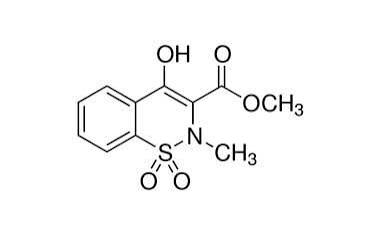
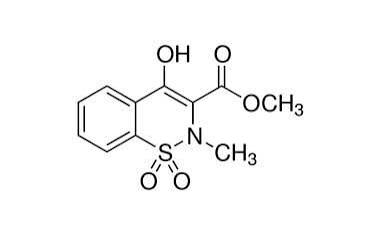
Methyl 4-hydroxy-2-methyl-1 CAS 35511-15-0


Table of Contents


1. Why Are Regulatory Requirements Reshaping Intermediates Manufacturing?

Regulatory requirements are reshaping intermediates manufacturing because the boundary between “intermediate” and “API” has become more scrutinized. Regulatory authorities in Europe, North America, and Asia are asking for more detailed information about the starting materials, the synthetic route, the impurities, and the controls that sit upstream of the API. An intermediate that was once described only by a specification sheet is now expected to be supported by a documented control strategy. This shift is not a paperwork exercise. It changes the way the manufacturing process is designed, validated, and monitored.

The timeline below traces the main regulatory developments that have affected intermediates manufacturing and what each one means for a buyer.

  • ICH Q11 and the starting material justification: Regulators now expect a science-based justification for the point at which the synthetic route is considered to begin. This means that intermediates closer to the starting material must be manufactured under stronger controls, and the supplier must be able to explain why the proposed starting material is appropriate.
  • ICH M7 and genotoxic impurity assessment: Intermediates that contain structural alerts must be assessed for mutagenic potential, and the control strategy must be justified. A supplier that cannot provide the assessment is a supplier that cannot support a modern regulatory submission.
  • ICH Q3A and impurity qualification: The reporting, identification, and qualification thresholds apply to the intermediate as well as the API. The supplier must have the analytical methods and the toxicological justification for specified impurities.
  • Data integrity expectations: Chromatography data, batch records, and deviation records must be attributable, legible, contemporaneous, original, and accurate. The supplier’s data governance is now part of the buyer’s due diligence.

For a procurement team, the practical consequence is that the supplier’s regulatory documentation is as important as the product specification. The table below summarizes the regulatory documents a buyer should request before qualifying a Pharmaceutical Intermediates supplier.

Document Purpose Procurement Check
Starting material justification Defines the regulatory starting point of the route Confirm the justification is science-based and documented
Genotoxic impurity assessment Evaluates structural alerts and control strategy Confirm the assessment covers all relevant impurities
Impurity profile report Identifies and quantifies organic, inorganic, and residual impurities Confirm the thresholds and the qualification data are included
Analytical method validation Demonstrates that the methods are suitable Confirm accuracy, precision, LOD, and LOQ are documented
Data integrity policy Defines how electronic and paper records are governed Confirm audit trails and access controls are in place

Our factory at Henan Purui Pharmaceutical Co., Ltd. develops the regulatory documentation for our Pharmaceutical Intermediates as part of the process development package. We do not treat the documentation as a batch release formality. We treat it as the technical basis for the control strategy, the analytical methods, and the customer’s regulatory submission. This is the standard that buyers should expect from a supplier in the current regulatory environment.


2. How Is Supply Chain Resilience Changing Intermediates Sourcing?

Supply chain resilience is changing intermediates sourcing because the events of the past several years have demonstrated that a single-source, low-inventory model is not robust enough for pharmaceutical manufacturing. A single plant outage, a shipping disruption, or a regulatory hold at one site can interrupt the supply of an intermediate that is used in a life-saving drug. Procurement teams are responding by redesigning their sourcing strategies around multi-site qualification, strategic inventory, and supplier transparency. The table below presents a risk matrix that buyers can use to evaluate the resilience of an intermediates supply chain.

Risk Category Risk Description Mitigation Strategy Supplier Evidence to Request
Single-site dependency All volume from one manufacturing site Qualify a second site or a second supplier Site list and qualification status
Raw material concentration Key starting material from one source Qualify alternate raw material sources Raw material supplier approval records
Logistics disruption Shipping delays or port congestion Hold strategic inventory at the buyer or supplier Inventory policy and lead time data
Regulatory hold Import or export restriction at a site Maintain documentation for alternate markets Regulatory status per site and per market
Capacity constraint Supplier cannot scale with demand Contract for reserved capacity Capacity data and expansion plan

The resilience shift also changes the way buyers think about inventory. A just-in-time model that minimizes working capital can be appropriate for commodity intermediates with multiple qualified sources. It is not appropriate for a critical intermediate with a single source and a long lead time. The buyer must map the criticality of each intermediate against the resilience of its supply chain and set the inventory policy accordingly.

Our factory at Purui supports our customers’ resilience planning by providing site information, capacity data, and lead time transparency for our Pharmaceutical Intermediates. We also work with our customers on strategic inventory agreements for critical intermediates. The goal is to make the supply chain predictable, not just to fill the order.


3. What Role Does Continuous Flow Technology Play in Intermediates Production?

Continuous flow technology plays an increasingly important role in intermediates production because it offers advantages that batch processing cannot match for certain reactions. In continuous flow, the reactants are pumped through a reactor where the reaction occurs in a steady state, rather than in a large batch vessel. This approach provides better control of temperature, better mixing, and shorter residence times. For hazardous reactions, it reduces the inventory of reactive material at any moment, which improves safety. For reactions that are difficult to scale in batch, it offers a route to commercial production. The table below compares batch and continuous flow for intermediates production.

Parameter Batch Processing Continuous Flow
Temperature control Limited by vessel heat transfer Excellent, high surface-to-volume ratio
Residence time distribution Broad, can cause side reactions Narrow, improves selectivity
Hazardous chemistry Large inventory of reactive material Small inventory, safer operation
Scale-up Difficult, geometry changes Numbering-up of identical modules
Flexibility Good for multi-product campaigns Best for dedicated continuous processes

The technology shift is not a replacement of batch processing. Many intermediates are still best made in batch, especially when the volume is low and the product mix is diverse. The shift is toward selecting the right technology for the right step. A supplier that has both batch and flow capability can choose the route that delivers the best quality, safety, and cost for the specific intermediate.

Our factory at Henan Purui Pharmaceutical Co., Ltd. evaluates each Pharmaceutical Intermediates project against both batch and flow options during process development. We select the technology that meets the customer’s quality and regulatory requirements, and we provide the process description and the control strategy that the customer needs for their submission. The goal is to use the technology that fits the chemistry, not to force the chemistry into a preferred technology.


4. How Are Quality Systems Adapting to More Complex Intermediates?

Quality systems are adapting to more complex intermediates because the molecules themselves are more complex. Modern intermediates often contain multiple chiral centers, sensitive functional groups, and trace impurities that must be controlled at very low levels. A quality system that was designed for a simple intermediate may not be adequate for a complex one. The adaptation is visible in four areas: analytical capability, deviation management, supplier qualification, and data governance. The table below summarizes the evolution of each area.

Quality System Area Earlier Approach Adapted Approach Procurement Evidence
Analytical capability HPLC purity and basic identity Chiral HPLC, LC-MS, GC-MS, ICP-MS Instrument list and method validation
Deviation management Reactive investigation Trend-based, risk-based investigation Deviation trend report
Supplier qualification Certificate of analysis review On-site audit and raw material risk assessment Audit report and supplier approval records
Data governance Paper records Electronic systems with audit trails Data integrity policy and system list

The analytical capability is the most visible change. A complex intermediate may require chiral separation, trace metal analysis, and structural elucidation of unknown impurities. A supplier that does not have these capabilities in-house must rely on external laboratories, which lengthens the investigation cycle and weakens the control. The buyer should ask whether the analytical methods are performed in-house and whether the instruments are qualified.

Our factory at Henan Purui Pharmaceutical Co., Ltd. has invested in the analytical capability required for complex Pharmaceutical Intermediates. We perform chiral HPLC, LC-MS, GC-MS, and ICP-MS in-house, and we maintain the method validation data for each product. We also operate an electronic quality management system with audit trails and access controls. The goal is to make the quality system fit the complexity of the product, not to fit the product to a limited quality system.


5. What Does Sustainability Mean for Intermediates Procurement?

Sustainability is becoming a procurement criterion for intermediates because the pharmaceutical industry’s environmental footprint is under scrutiny from regulators, investors, and customers. The footprint of an intermediate is dominated by solvent consumption, energy use, and waste generation. A supplier that has reduced solvent consumption, switched to greener solvents, or improved waste treatment is a supplier that is better positioned for the regulatory and commercial pressures of the next decade. The table below presents the sustainability criteria that buyers can use to evaluate an intermediates supplier.

Sustainability Criterion What to Evaluate Evidence to Request
Solvent intensity Solvent mass per kilogram of product Process mass intensity data
Green solvent adoption Use of solvents with lower environmental impact Solvent selection guide and process description
Energy efficiency Energy per kilogram of product Energy consumption data
Waste treatment Treatment of aqueous and organic waste streams Waste handling procedure and permits
Environmental management Certified environmental management system ISO 14001 certificate

The sustainability shift is not only about environmental performance. It is also about cost and supply security. A process that uses less solvent is usually a process that costs less to run and is less exposed to solvent price volatility. A process that generates less waste is usually a process that has fewer regulatory permits to maintain. The supplier that has invested in these improvements is a supplier that is more resilient and more competitive.

Our factory at Henan Purui Pharmaceutical Co., Ltd. tracks process mass intensity and energy consumption for our Pharmaceutical Intermediates, and we work with our customers on solvent recovery and waste reduction where the process allows. We hold ISO 14001 certification for our environmental management system. The goal is to make sustainability a measurable part of the product, not a marketing claim.


6. Conclusion

The Pharmaceutical Intermediates industry is adapting to changing manufacturing requirements through five shifts: a regulatory shift toward deeper documentation and science-based justification, a resilience shift toward multi-site qualification and strategic inventory, a technology shift toward continuous flow where the chemistry benefits, a quality shift toward advanced analytics and data governance, and a sustainability shift toward lower solvent intensity and better waste treatment. For procurement teams, the implication is that supplier evaluation must go beyond the specification sheet. The buyer must ask for the regulatory documentation, the resilience data, the technology description, the analytical capability, and the sustainability metrics. A supplier that can provide this evidence is a supplier that is adapting. A supplier that cannot is a supplier that is falling behind.

Our factory at Henan Purui Pharmaceutical Co., Ltd. operates within this changing landscape. We develop the regulatory documentation, maintain the quality systems, invest in the analytical capability, and track the sustainability metrics for our Pharmaceutical Intermediates. We invite procurement teams to review our documentation and to include us in their supplier qualification programs. If you are sourcing Pharmaceutical Intermediates and need a supplier that can meet the changing requirements, contact our team to discuss your technical and regulatory needs.


7. Frequently Asked Questions (FAQ)

Question 1: What regulatory documents should I request from a pharmaceutical intermediates supplier?
Answer: Request the starting material justification, the genotoxic impurity assessment, the impurity profile report, the analytical method validation, and the data integrity policy. These documents demonstrate that the supplier has a documented control strategy that can support your regulatory submission. A supplier that cannot provide them is a supplier that may not be ready for the current regulatory environment.

Question 2: How can I make my intermediates supply chain more resilient?
Answer: Map the criticality of each intermediate against the number of qualified sources and the lead time. Qualify a second site or a second supplier for critical items. Hold strategic inventory for intermediates with a single source and a long lead time. Ask the supplier for site information, capacity data, and lead time transparency. Resilience is a design choice, not a reaction to a disruption.

Question 3: When does continuous flow make sense for intermediates production?
Answer: Continuous flow makes sense when the reaction is hazardous, when the temperature control is critical, when the residence time distribution must be narrow, or when the scale-up in batch is difficult. It is not always the right choice. A supplier that has both batch and flow capability can select the technology that fits the chemistry. Ask the supplier how the technology choice was made for your specific intermediate.

Question 4: What analytical capabilities should a modern intermediates supplier have?
Answer: A modern supplier should have in-house capability for HPLC, chiral HPLC, LC-MS, GC-MS, and ICP-MS, and should be able to perform structural elucidation of unknown impurities. The methods should be validated, and the instruments should be qualified. A supplier that relies entirely on external laboratories may have longer investigation cycles and weaker process control.

Question 5: How do I evaluate the sustainability performance of an intermediates supplier?
Answer: Request process mass intensity data, solvent selection information, energy consumption data, waste treatment procedures, and the ISO 14001 certificate. Compare the solvent intensity and energy intensity across suppliers. A supplier that has invested in solvent recovery and waste reduction is usually a supplier that is more resilient and more cost-competitive. Sustainability is a measurable criterion, not a marketing statement.


Contact Henan Purui Pharmaceutical Co., Ltd. today to request the regulatory, quality, and sustainability documentation for our Pharmaceutical Intermediates and to discuss how our manufacturing capabilities meet your changing requirements.

Related News
Leave me a message
X
We use cookies to offer you a better browsing experience, analyze site traffic and personalize content. By using this site, you agree to our use of cookies. Privacy Policy
RejectAccept